
Builders of Reefs
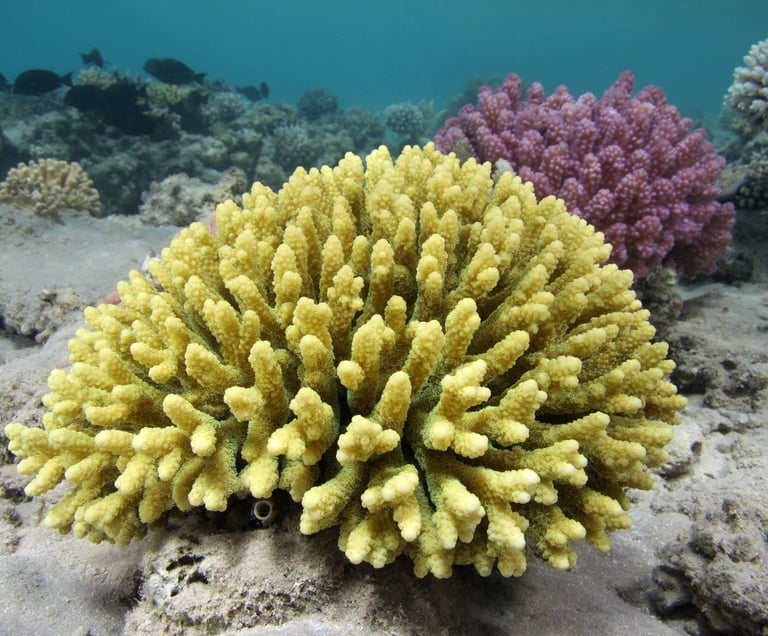
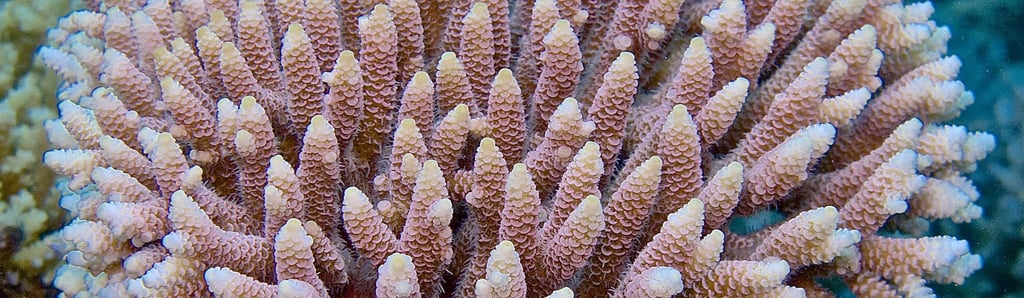
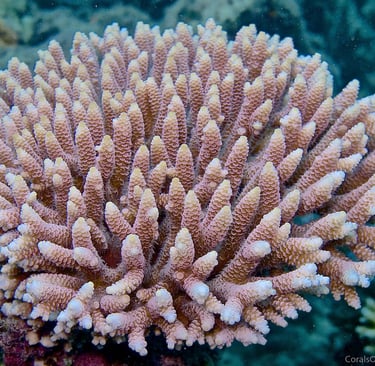
Acropora corals are the fast‑growth architects of many tropical reefs, which is why restoration teams worldwide treat them as the “first responders” in coral nurseries. Their branching and tabular forms quickly rebuild the three‑dimensional skeleton that fish, invertebrates, and even coastal communities rely on.
WHAT MAKES ACROPORA SPECIAL REEF BUILDERS?
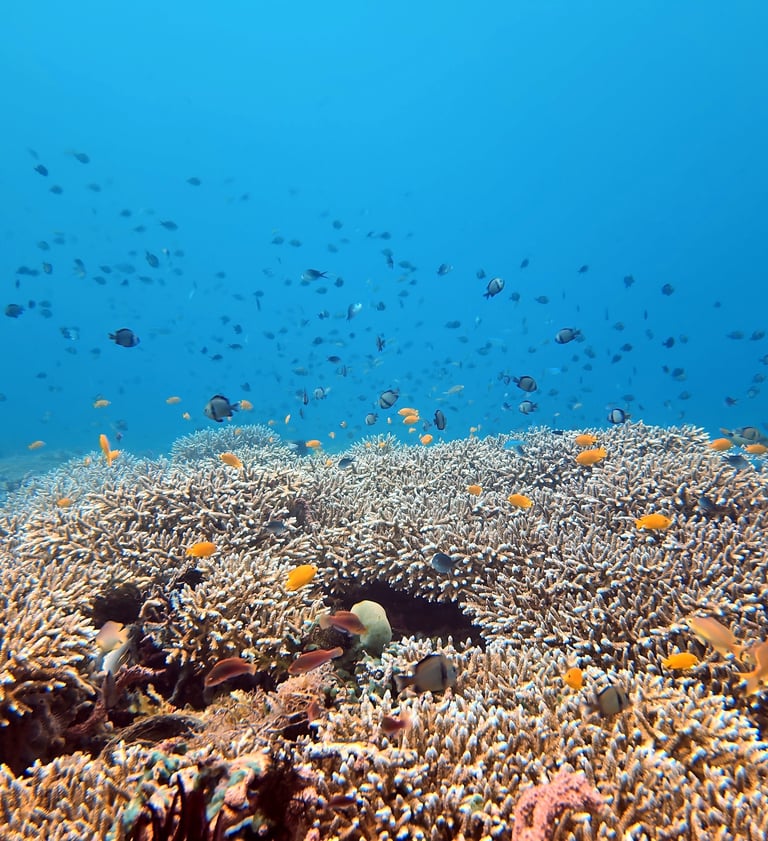
Acropora is one of the most important reef‑building coral genera in the Indo‑Pacific and (historically) the Caribbean, dominating shallow, well‑lit reef zones when conditions are good. These corals grow as branching, staghorn, and table forms that interlock into dense thickets, creating a complex, three‑dimensional framework across the reef crest and upper slope.
Fastest calcifiers: Acroporids are among the fastest‑calcifying reef corals, with some species extending branches by up to tens of centimeters per year, far outpacing many massive corals like Porites.
Structural dominance: In healthy systems, Acropora can dominate benthic cover, strongly shaping reef topography and leaving fewer open spaces for slower‑growing competitors.
Over geological timescales, acroporids became the most species‑rich group of reef‑building corals, and their rapid vertical and lateral growth has helped reefs keep up with sea‑level changes and maintain habitat diversity.
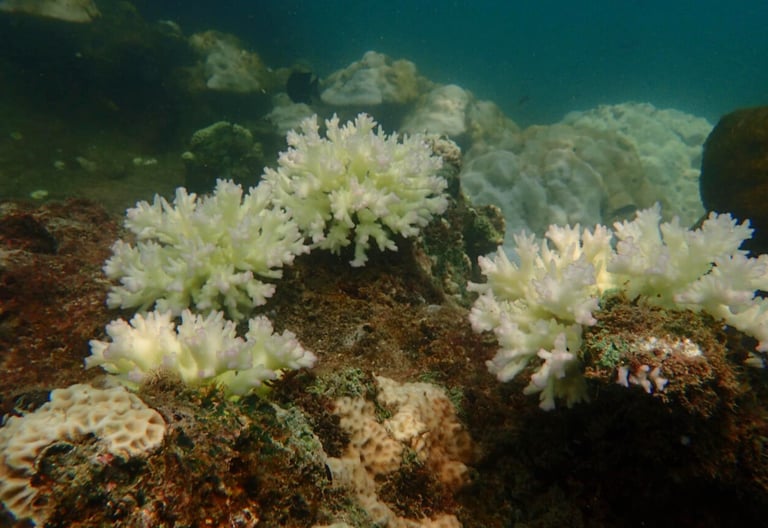
HABITAT, BIODIVERSITY, AND WAVE PROTECTION
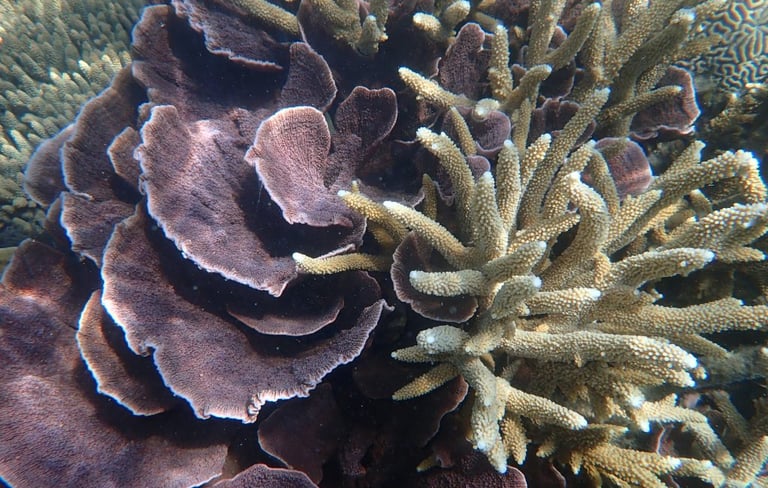
Because of their intricate branches and plates, Acropora colonies create prime real estate for reef life. Their structural complexity supports biodiversity and physical protection functions that simpler, flatter reefs cannot.
Fish nurseries: Dense Acropora stands provide critical shelter, nursery grounds, and feeding surfaces for a wide range of reef fishes, from damselfish and wrasses to juvenile predators.
Structural complexity: Studies show that the three‑dimensional roughness of coral frameworks is a key factor in coastal protection, with complex reefs dissipating significantly more wave energy than low‑relief ones.
Even dead Acropora skeletons can continue to contribute to habitat provision and complexity for some time, underlining how important their physical form is to reef function. When large areas of Acropora are lost, reefs tend to flatten, reducing fish biomass, niche diversity, and the reef’s ability to buffer waves.
WHY ACROPORA IS GLOBAL NURSERY WORKHORSE
From the Caribbean to the Coral Triangle, Acropora is the go‑to genus in coral gardening and restoration nurseries because it offers a rare mix of speed, practicality, and visible impact.
Fast growth and fragmentation: Acropora fragments grow quickly and naturally propagate via breakage, with high survivorship and rapid healing of small wounds compared to many other corals.
Rapid biomass gains: Coral gardening programs have shown that in situ Acropora nurseries can massively increase coral biomass from relatively small donor collections, allowing thousands of fragments to be outplanted to degraded reefs each year.
A major review of Caribbean Acropora projects documented over 60 restoration efforts across 14 countries, with most using coral gardening techniques (ropes, frames, trees, or blocks) and achieving fragment survival often above 65–95% in well‑sited nurseries. Similar approaches are now standard in Indo‑Pacific projects, where Acropora’s fast growth produces visible habitat in months to a few years, keeping funders and local communities engaged
STRATEGIC ROLE IN REBUILDING WHOLE REEFS
Restoration teams use Acropora much like foresters use pioneer tree species: to re‑establish structure quickly so that the rest of the ecosystem can follow. Replanted Acropora thickets jump‑start the recovery of fish communities, increase rugosity, and begin restoring the reef’s wave‑attenuation function.
Structural “jump‑start”: Fast‑growing staghorn and table Acropora rapidly add vertical height and branching complexity, which boosts habitat availability and prepares the reef for later colonization by slower, more robust corals.
Scaling up restoration: Because fragments are easy to handle, grow, and outplant in bulk, Acropora allows practitioners to scale projects from a few test plots to entire reef patches within realistic budgets and timeframes.
There are trade‑offs—Acropora skeletons are lighter and more fragile, and the genus is often sensitive to thermal stress and disease—but as a first step in large‑scale reef rebuilding, it remains one of the most powerful tools in the restoration toolkit
BUILDERS OF REEFS
Acropora corals are the fast‑growth architects of many tropical reefs, which is why restoration teams worldwide treat them as the “first responders” in coral nurseries.
Phone/WhatsApp
+63 917-779-8761
Info@reefbuddyphilippines.org